ServicesFillings
Fillings for Kids in Stoughton, MA
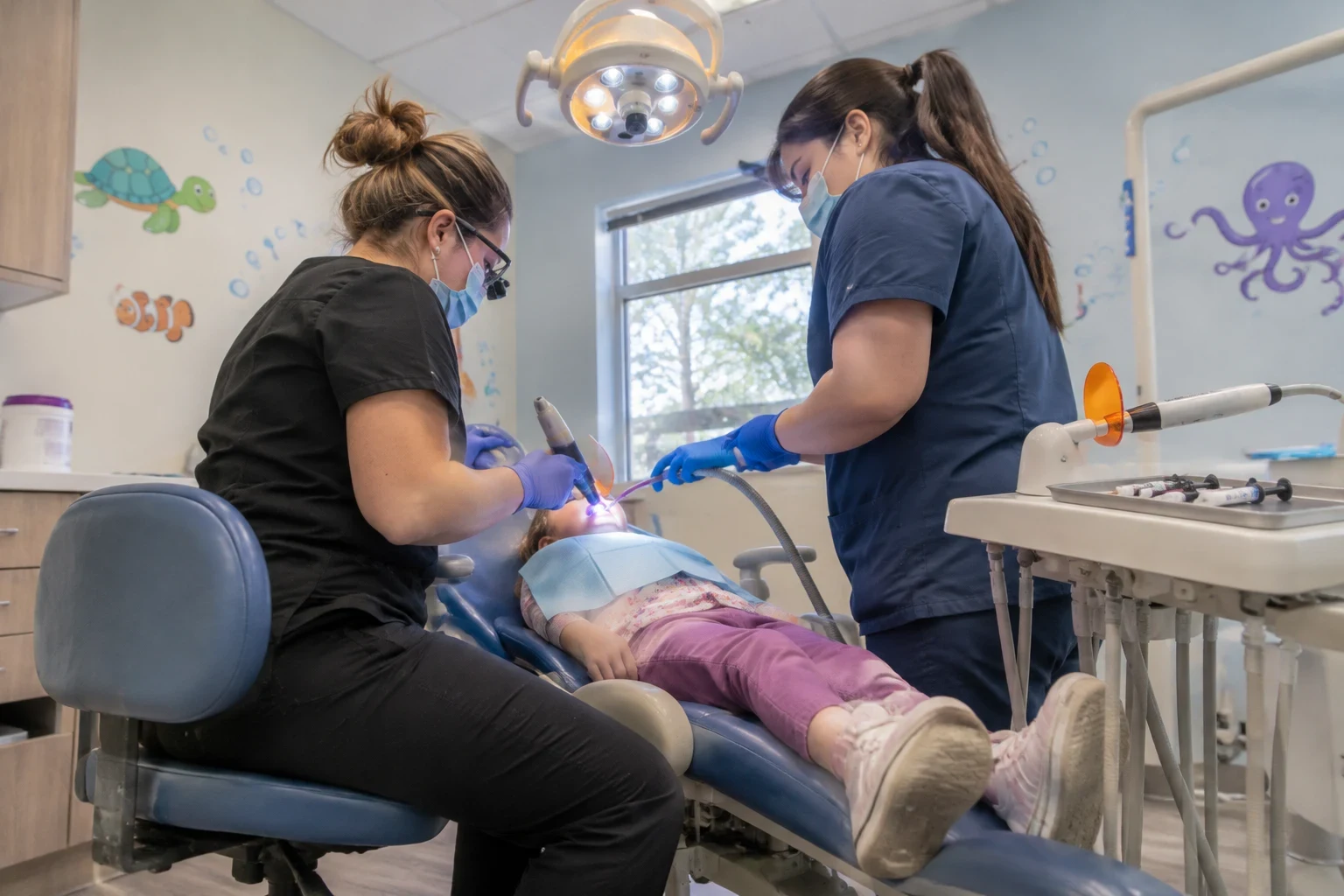
When a cavity shows up, we fix it with a small, tooth-colored filling placed with care. We numb gently, keep the tooth dry while we work and check your child's bite before they leave, so the filling holds up through years of chewing and snacking.
Small cavities, fixed the right way
A filling replaces the part of a tooth that decay has softened. We remove the damaged area, clean what is left and rebuild the shape with a material that bonds to the tooth. Caught early, most cavities in kids need only a small filling and one short visit.
How long a filling lasts comes down to steps you never see. Saliva on the tooth during bonding, a rough edge where food can catch, or a filling that sits a hair too high in the bite are the usual reasons fillings fail early. We slow down on exactly those steps.
Baby teeth matter too. Back baby molars often stay in place until around age 10 to 12, holding space for adult teeth and helping kids chew and speak. Leaving a cavity in one can lead to pain, infection or an early loss that lets the teeth around it drift.
What your child's filling visit includes
Gentle numbing
We start with a flavored numbing gel so the injection is barely felt, then wait until the tooth is fully numb before we begin. For kids who are very anxious, our Sedation Dentistry page explains other comfort options.
Keeping the tooth dry
Bonding materials stick best to a clean, dry surface. We use a small rubber dam or cotton barriers so saliva and the tongue stay out of the way while the filling goes in.
Tooth-colored materials
Most fillings we place are composite resin, which blends in with the tooth. In some spots we may choose glass ionomer, which releases a little fluoride and suits teeth that are harder to keep dry. We explain the choice before we start.
Layered, shaped and polished
Composite goes in thin layers, each hardened with a curing light. We shape it to match the grooves of the tooth and polish the edges smooth so plaque has less to cling to.
A careful bite check
Your child bites on thin marking paper and we smooth any high spot. A filling that sits right in the bite is less likely to chip or leave the tooth sore.
Signs your child may need a filling
Chalky white or brown spots
Early decay often looks like a dull white line near the gums or a brown spot in the grooves of back teeth. White spots can sometimes be reversed with fluoride. Brown or dark spots usually need a closer look.
Wincing at cold or sweet
If your child pulls back from ice cream, juice or cold water on one side, a cavity may have reached the softer layer under the enamel.
Food packing between teeth
A spot where food keeps getting stuck between two teeth can mean a cavity has opened a gap there.
Chewing on one side
Kids rarely describe tooth pain clearly. Favoring one side, eating slowly or skipping crunchy foods are common clues.
A visible hole or dark area
By the time you can see a hole, the decay has been working for a while. Getting in soon helps keep it from reaching the nerve, where it may need a root canal or a pediatric crown instead.
How a filling appointment goes
- 1
We look and explain
We check the tooth, take an X-ray if needed and show you what we see. You'll hear which tooth it is, how deep the cavity looks and which material we recommend before anything starts.
- 2
Numbing and setup
We use kid-friendly words, apply the numbing gel and place the isolation. Many kids hold a favorite toy or watch a show during this part.
- 3
Removing decay and filling
We clean out the soft decay, prepare the surface for bonding and build the filling in layers. A single small filling is usually a short appointment.
- 4
Bite check and aftercare
We check the bite, polish the filling and go over aftercare with you. Lips and cheeks stay numb for a couple of hours, so please watch that your child doesn't chew on them and stick to soft foods until feeling returns.
What affects the cost of a filling
Every filling is priced by the tooth and the work it needs, so we walk you through the details at the exam before treatment begins. We accept MasterCard, Visa, Discover, most insurance plans and CareCredit Patient Payment Plan. Our front desk can help you sort out what your plan covers when you call.
- Size of the cavity
- A small spot in one groove takes less time and material than decay that wraps around the side of a tooth.
- Number of surfaces
- Fillings are usually billed by how many tooth surfaces they cover, so a cavity between two teeth often counts as more than one surface.
- Material used
- Composite and glass ionomer are priced differently, and insurance plans may treat them differently too.
- Comfort options
- If your child needs nitrous oxide or another form of sedation, that is a separate part of the visit.
- How many teeth
- Several cavities may be treated in one visit or split across a few, depending on what is easiest for your child.
Questions parents ask about fillings
Something not covered here? (781) 590-3367
Why fill a baby tooth that will fall out anyway?
Many baby molars stay until around age 10 to 12. An untreated cavity can grow, cause pain or infection and lead to losing the tooth early, which lets nearby teeth drift into the gap. A filling keeps the tooth working until it is ready to come out on its own.
Will getting a filling hurt?
Your child may feel some pressure and hear a few noises, but the tooth itself should be numb. We use numbing gel before the injection and make sure the area is fully numb before starting. If your child signals discomfort, we stop and adjust.
Are tooth-colored fillings strong enough for kids?
Yes. Composite and glass ionomer are widely used in children's dentistry. How well they last depends a lot on placement: a dry tooth, careful layering and a bite that is checked and adjusted. That is where we spend our time.
When can my child eat after a filling?
Composite is hardened with a light before your child leaves, so the filling itself is set. The thing to wait for is the numbness to wear off, usually a couple of hours. After that, normal meals are fine.
How do we avoid needing more fillings?
Regular exams and cleanings catch small spots while they are easy to treat. Sealants protect the deep grooves of back teeth, and fluoride treatment strengthens enamel. At home, brushing twice a day with fluoride toothpaste and cutting back on sticky snacks and sipped sugary drinks make a real difference.
Let's take care of that cavity
Small cavities are simpler to fix than big ones. Give us a call to set up a visit, and if you're new to our practice we can register your child on the same call.