ServicesSpace Maintainers
Space Maintainers in Stoughton for Kids Who Lost a Baby Tooth Early
When a baby tooth comes out before its time, the teeth beside it start drifting into the gap. A space maintainer holds that spot open until the adult tooth arrives. We size each one to your child's mouth, cement it carefully and check it at every visit.
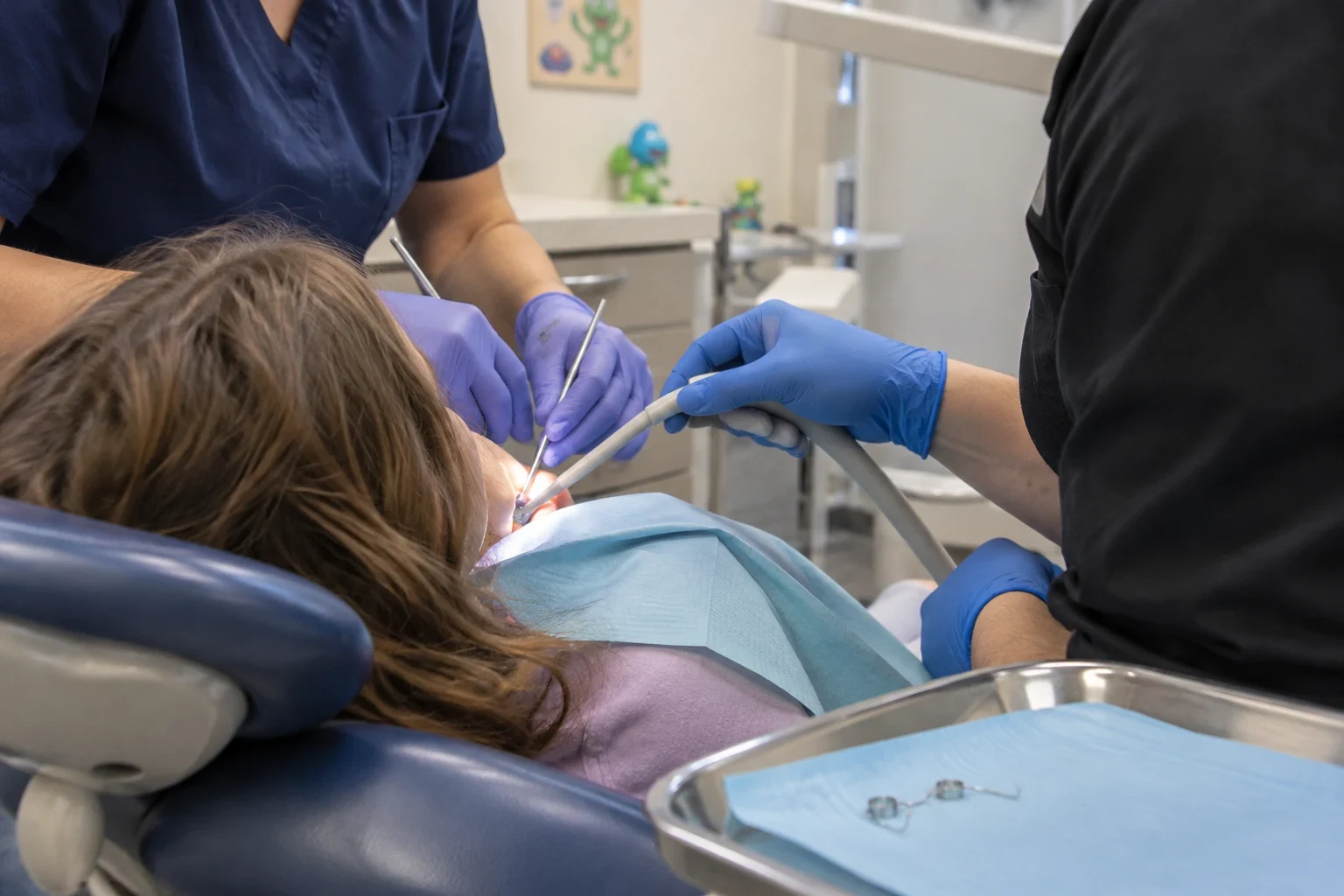
What a Space Maintainer Does
Baby teeth are placeholders. If one is lost early to decay, an injury or an extraction, the neighboring teeth can tip and slide into the empty space, sometimes within a few months. The adult tooth underneath then has nowhere to go, and it may come in crooked, get blocked or stay stuck in the gum.
A space maintainer is a small metal appliance that keeps the gap the right width. Most are a thin wire loop attached to a band that wraps around a nearby molar. It is not braces and does not move teeth. It simply holds still while your child grows.
How long one lasts depends on small things: how snugly the band fits, how evenly the cement seals, and whether the loop sits just above the gum without pressing into it. Those are the details we spend our time on, because a loose band or a poking wire is what usually sends kids back early.
What Your Child's Space Maintainer Includes
- An exam and X-rays first
- We look at where the adult tooth is and how far along it is. If it is close to coming in, your child may not need an appliance at all, and we will tell you so.
- Choosing the right type
- A band-and-loop works for one missing back tooth. A lower lingual arch or a Nance appliance holds space on both sides when more than one tooth is gone. A distal shoe guides a first adult molar that has not erupted yet.
- Careful band sizing
- We try several band sizes on the anchor tooth until one seats fully without rocking. A band that is even slightly loose lets food and bacteria under it.
- A loop shaped to the gum
- The wire is bent to rest just clear of the gum and wide enough for the adult tooth to pass through. That keeps it comfortable and avoids sore spots.
- Cementing and a bite check
- We dry the tooth well before cementing so the seal holds, then have your child bite down to make sure nothing catches.
- Follow-up at regular checkups
- At each cleaning we check the band, the cement and the gap, and we remove the appliance once the adult tooth starts to show.
Signs Your Child May Need a Space Maintainer
A back baby tooth came out early
Baby molars usually stay until around ages 10 to 12. Losing one years ahead of that is the most common reason for a space maintainer.
A tooth was pulled because of decay
If your child had an extraction, ask whether the gap needs holding. We plan for this before the tooth comes out whenever we can.
The gap looks smaller than it did
Neighboring teeth leaning into the space is a sign drift has already started. Holding it sooner keeps the problem small.
An injury knocked a tooth out
Falls and sports bumps can take out teeth early. Front teeth often do not need a maintainer, but it is worth a look.
Your child's current appliance feels loose
If it wiggles, clicks or has come off, keep it and schedule a visit so we can recement or replace it before the space closes.
How the Visits Go
- 1
Exam and plan
We check the gap, take X-rays and explain which appliance fits your child's situation and how long it will likely stay in. You can ask anything before we start.
- 2
Fitting and impression
We fit a band on the anchor tooth and take an impression or scan. It takes a few minutes and there is no drilling.
- 3
The appliance is made
A lab builds the maintainer to match that impression, with the loop shaped to your child's gap and gum line.
- 4
Cementing day
At the second visit we clean and dry the tooth, cement the appliance, check the bite and show you and your child how to brush around it. Most kids feel some pressure for a day or two, then forget it is there.
- 5
Checks until it comes out
We look at it at every checkup and take it out when the adult tooth is on its way. Removal is quick and usually needs no numbing.
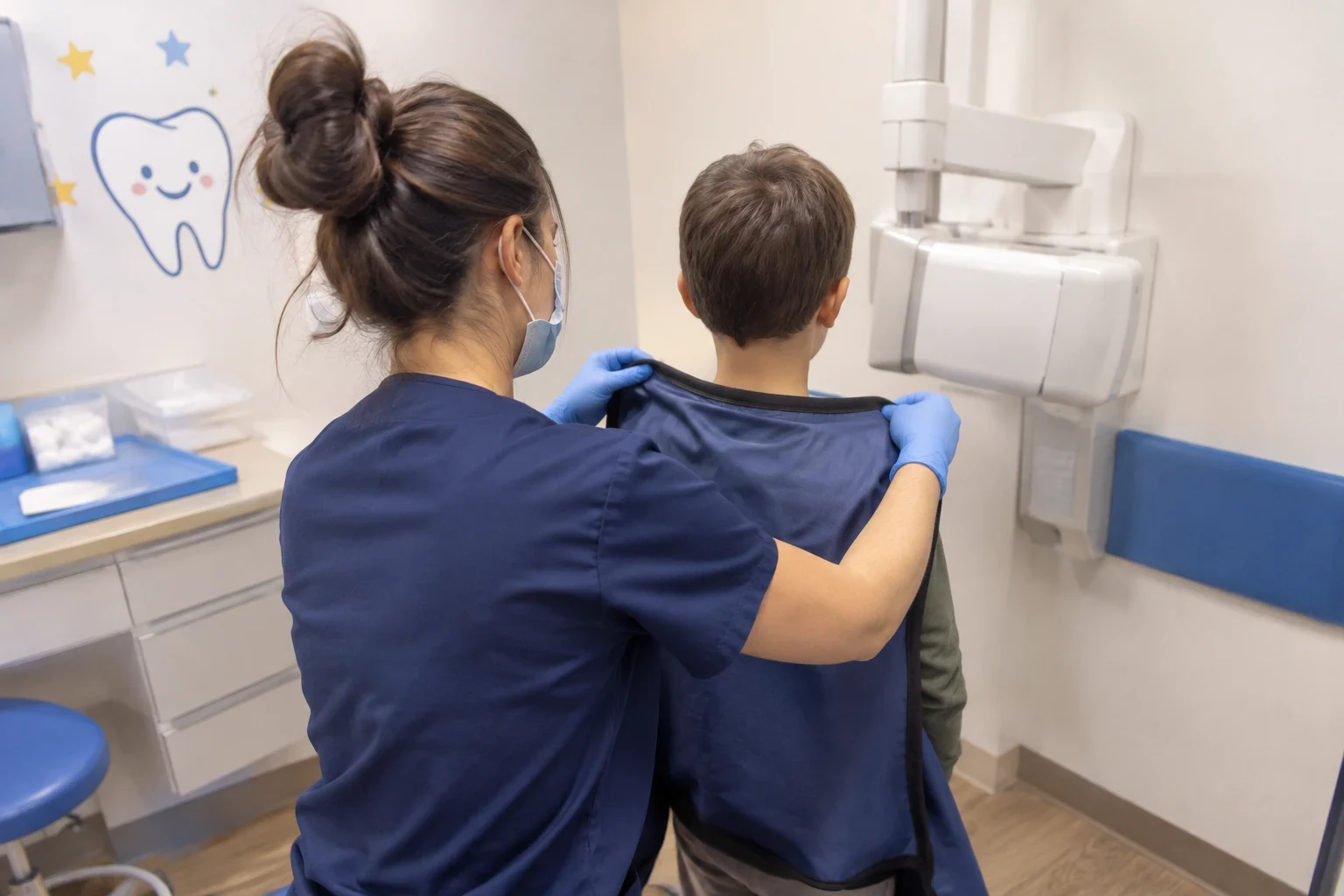
What Affects the Cost
The price depends mostly on which appliance your child needs and how much is involved in getting there. We go over the costs at the exam before anything is made. We accept MasterCard, Visa, Discover, most insurance plans and CareCredit Patient Payment Plan.
- Type of appliance
- A single band-and-loop is simpler than a lingual arch or Nance appliance that spans both sides of the mouth. A distal shoe takes extra steps because it sits under the gum.
- One gap or several
- Missing teeth on both sides may need two appliances or one larger one.
- Related treatment
- If a tooth still needs to be extracted, or the anchor tooth has a cavity that needs a filling first, that is part of the plan.
- Insurance coverage
- Many dental plans cover space maintainers for children, but limits differ. Bring your card and we can help you understand what your plan says.
Questions Parents Ask About Space Maintainers
Something not covered here? (781) 590-3367
Does getting a space maintainer hurt?
No needles or drilling are usually needed. The band can feel snug when it goes on, and some kids notice pressure for a day or two. A soft diet and children's pain reliever, if your pediatrician approves, usually cover it.
Can my child eat normally with one?
Mostly, yes. Skip sticky and chewy foods like caramel, taffy and gum, which can pull the band loose. Hard foods such as ice and hard candy can bend the wire.
How long will it stay in?
It stays until the adult tooth begins to come through, which can be months or a few years depending on your child's age. We check the X-rays as time goes on so it does not stay in longer than needed.
What if it comes loose or breaks?
Save the appliance if you can and schedule a visit soon. Often we can clean and recement it. Waiting too long can let the gap start closing.
Does my child really need one, or can we wait?
Sometimes waiting is fine, especially if the adult tooth is almost ready or a front tooth was lost. We will give you a straight answer based on the X-rays, not a default.
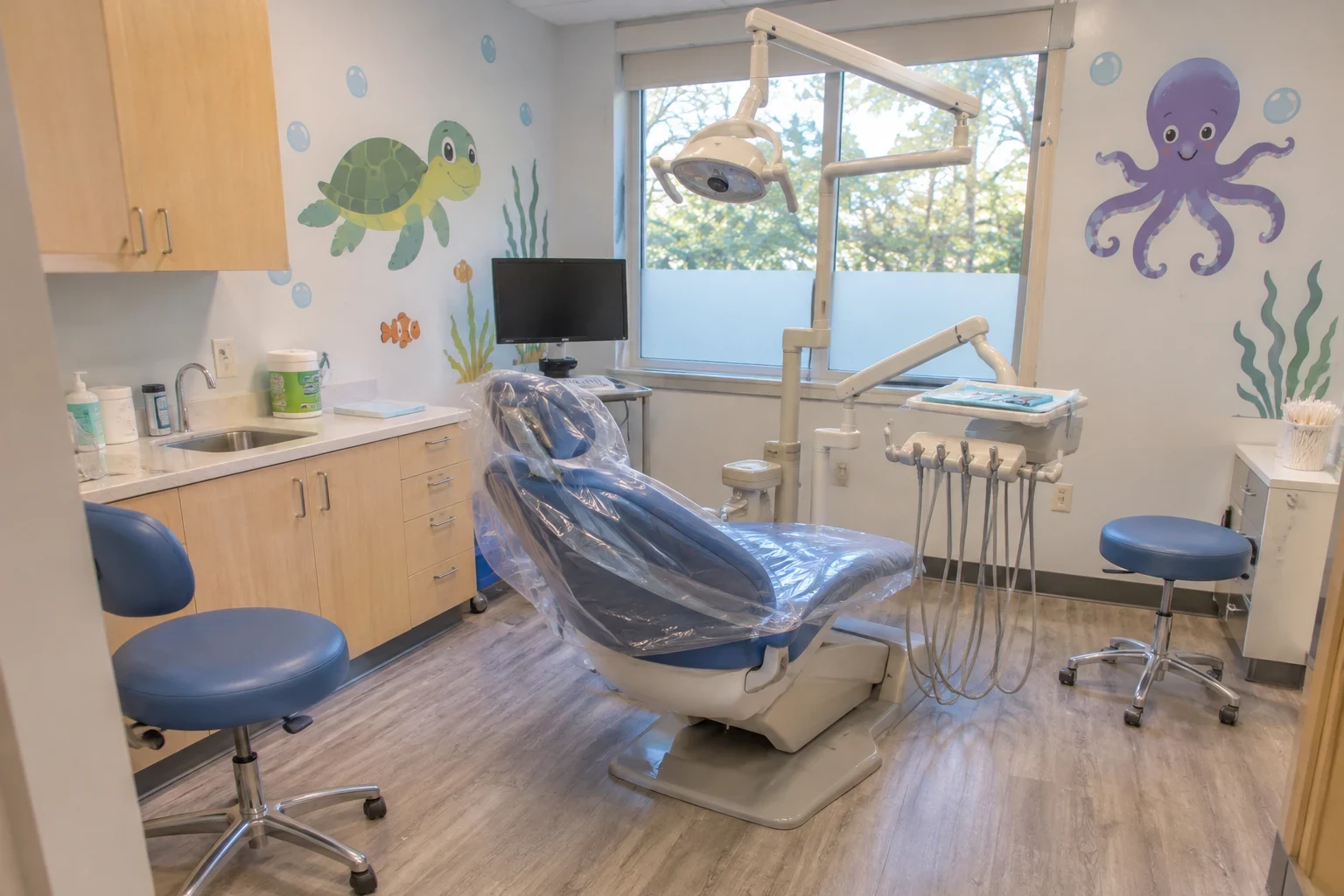
Let's Keep That Space Open
If your child lost a baby tooth early, a quick exam tells us whether a space maintainer makes sense. Families come to us from Stoughton, Canton, Sharon and nearby towns, and new patients are welcome.