ServicesFluoride Treatment
Fluoride Treatment for Kids in Stoughton
Fluoride varnish takes about a minute and helps your child's enamel stand up to cavities. We clean and dry each tooth first, then paint on a thin, even coat so it sticks where decay usually starts. No needles, no drills, and kids are back to playing right away.
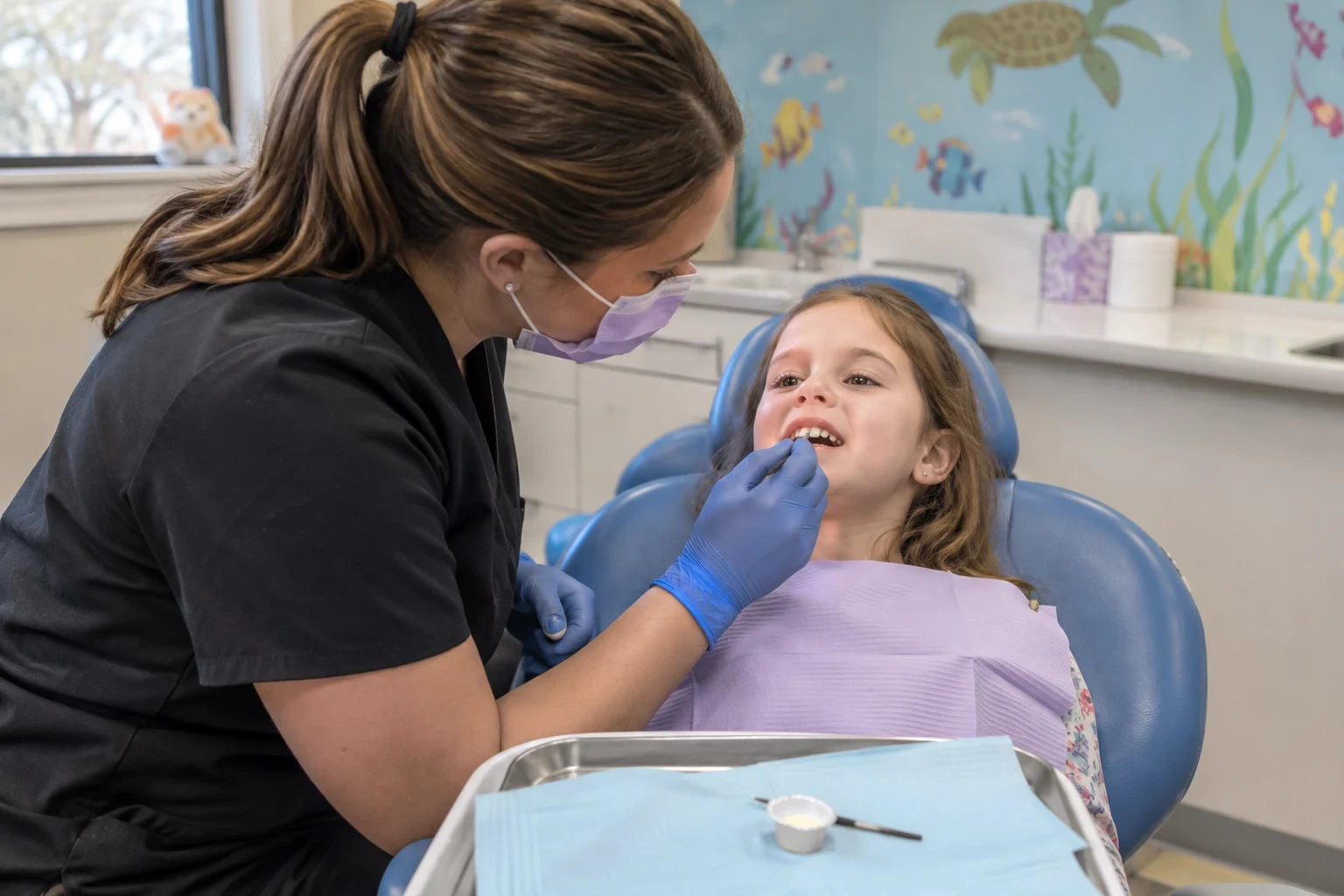
What Fluoride Treatment Does for Your Child
Fluoride is a mineral that soaks into tooth enamel and makes it harder for acids from food and bacteria to wear it down. It can also help reverse the earliest soft spots before they turn into a cavity that needs a filling.
A professional varnish holds far more fluoride than toothpaste, and it stays on the teeth for hours instead of rinsing away. That long contact time is the point. How well it works depends on small things: whether the teeth were dry, whether the coat reached the grooves and the gumline, and what your child does for the rest of the day. We pay attention to each of those, because a careless coat washes off before it helps.
Most kids get fluoride as part of their regular exams and cleanings, starting as soon as the first teeth come in.
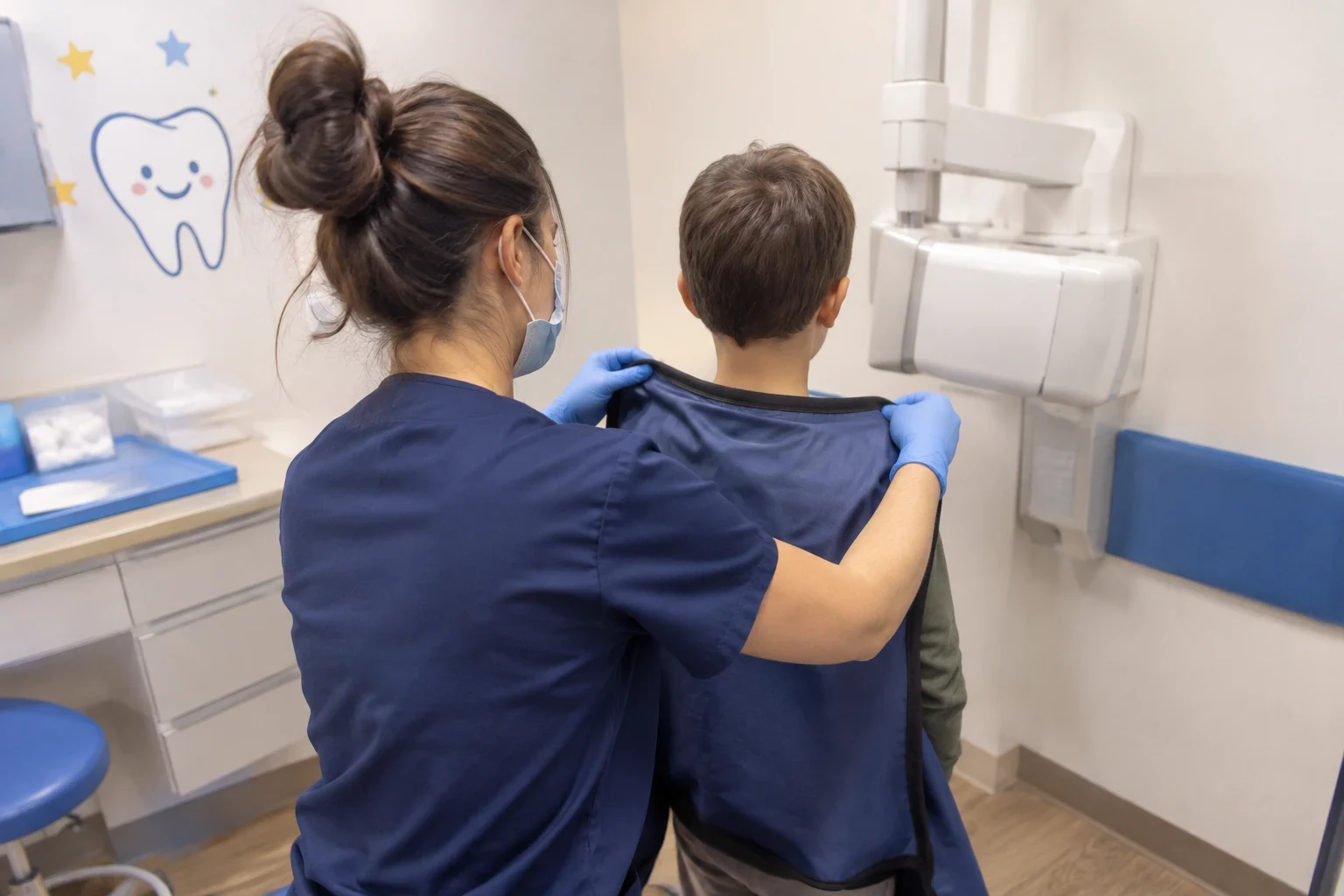
What Happens During the Treatment
- 01
A clean surface first
Plaque blocks fluoride from reaching enamel, so we start with clean teeth. When fluoride is part of a cleaning visit, it always comes last.
- 02
Drying each section
Varnish bonds best to dry enamel. We work a few teeth at a time, drying them with gauze or a gentle puff of air before painting.
- 03
A thin, even coat
We use a small brush to cover every surface, paying extra attention to back-tooth grooves, the spaces between teeth and the gumline. A thin layer sets quickly and is less noticeable to your child.
- 04
Kid-friendly flavors
The varnish comes in mild flavors, and it firms up on contact with saliva. There is no tray to hold and nothing to swallow.
- 05
Aftercare in plain words
Before you leave, we tell you exactly how long to wait before brushing and what foods to skip, so the coat stays on long enough to work.
Questions about Fluoride Treatment?
Call(781) 590-3367Signs Your Child Could Use Extra Fluoride
Chalky white spots
Dull white patches near the gumline are often the first sign of enamel losing minerals. Caught early, fluoride can help those spots firm up again.
Cavities in the past year
A recent filling means the conditions for decay are already there. More frequent varnish can help protect the teeth that are still healthy.
Frequent snacks or sippy cups
Juice, milk at bedtime or all-day grazing keeps teeth bathed in sugar. Fluoride adds a layer of defense while you work on habits.
Braces or crowded teeth
Brackets and tight spacing trap food in places a toothbrush misses, which is where decay tends to start.
Sensitive teeth
If your child winces at cold drinks, fluoride may help ease that sensitivity. We will check for a cavity at the same time.
How a Fluoride Visit Goes
- 1
Call to schedule
Phone us to set up an appointment or register a new patient. We can usually pair fluoride with a checkup so it is one trip.
- 2
A quick look and cleaning
We check your child's teeth, note any soft spots and clean away plaque. Younger kids can sit on a parent's lap if that feels more comfortable.
- 3
Painting on the varnish
The application takes a minute or two. We talk your child through it, count teeth together and keep it light.
- 4
Going home
Your child can drink water and eat soft foods soon after. We send you off with clear aftercare notes and a plan for the next application.
What Affects the Cost of Fluoride Treatment
Fluoride varnish is one of the simplest things we do, and for many families it is covered as preventive care. What you pay comes down to your plan and how often your child needs it. We go over it with you before treatment so nothing comes as a surprise.
- Your insurance plan
- Many plans cover fluoride for children up to a certain age and a set number of times per year. We accept most insurance plans and can help you understand what yours includes.
- How often it is applied
- Kids with a low cavity risk may need varnish twice a year. A child with soft spots or recent decay may benefit from more frequent visits.
- What else the visit includes
- Fluoride on its own costs less than a visit that also includes an exam, X-rays or sealants on newly erupted molars.
- How you pay
- We accept MasterCard, Visa, Discover, most insurance plans and CareCredit Patient Payment Plan.
Fluoride Treatment Questions from Parents
Is fluoride varnish safe for babies and toddlers?
Yes. Varnish is applied in a very small amount and sets on the teeth instead of being swallowed like a rinse. That is why it is the form we use for little ones. We can start as soon as the first teeth appear.
When can my child eat and brush after treatment?
Soft foods and drinks are fine soon after. Skip hot, hard, crunchy or sticky foods and hold off on brushing for several hours so the varnish keeps working. We will give you the exact timing at the visit.
We use fluoride toothpaste. Does my child still need this?
Toothpaste helps every day, but it rinses away fast. Varnish is stronger and stays on the enamel for hours, which gives teeth a deeper dose a few times a year. The two work well together.
Will it make my child's teeth look yellow?
Some varnishes leave a faint tint or a slightly fuzzy feel on the teeth. It is temporary and brushes off the next time your child brushes. A thin coat keeps it barely noticeable.
How is fluoride different from sealants?
Fluoride strengthens all the enamel it touches. Sealants are a coating placed in the deep grooves of back molars to keep food out. Many kids benefit from both, and we can talk through whether sealants make sense for your child.
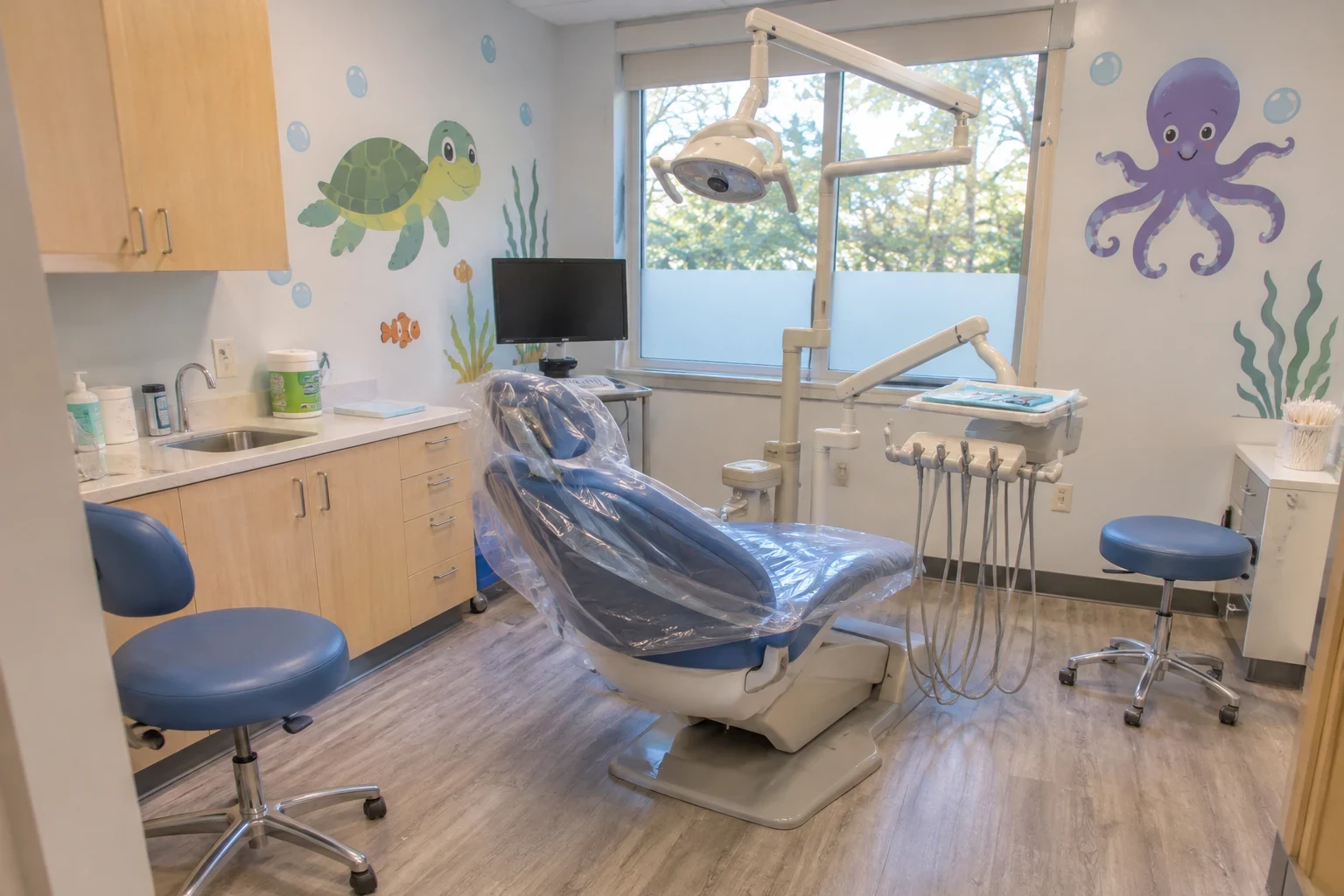
Give Your Child's Enamel a Little Extra Help
A few careful minutes at each visit can mean fewer fillings down the road. We see families from Stoughton and nearby towns like Canton, Sharon and Randolph.