ServicesPediatric Crowns
Pediatric Crowns in Stoughton
When a cavity has damaged too much of a baby tooth for a filling to hold, a crown covers and protects what is left. We take the time to size, shape and seal each crown so it stays put through years of chewing.
What a Pediatric Crown Does
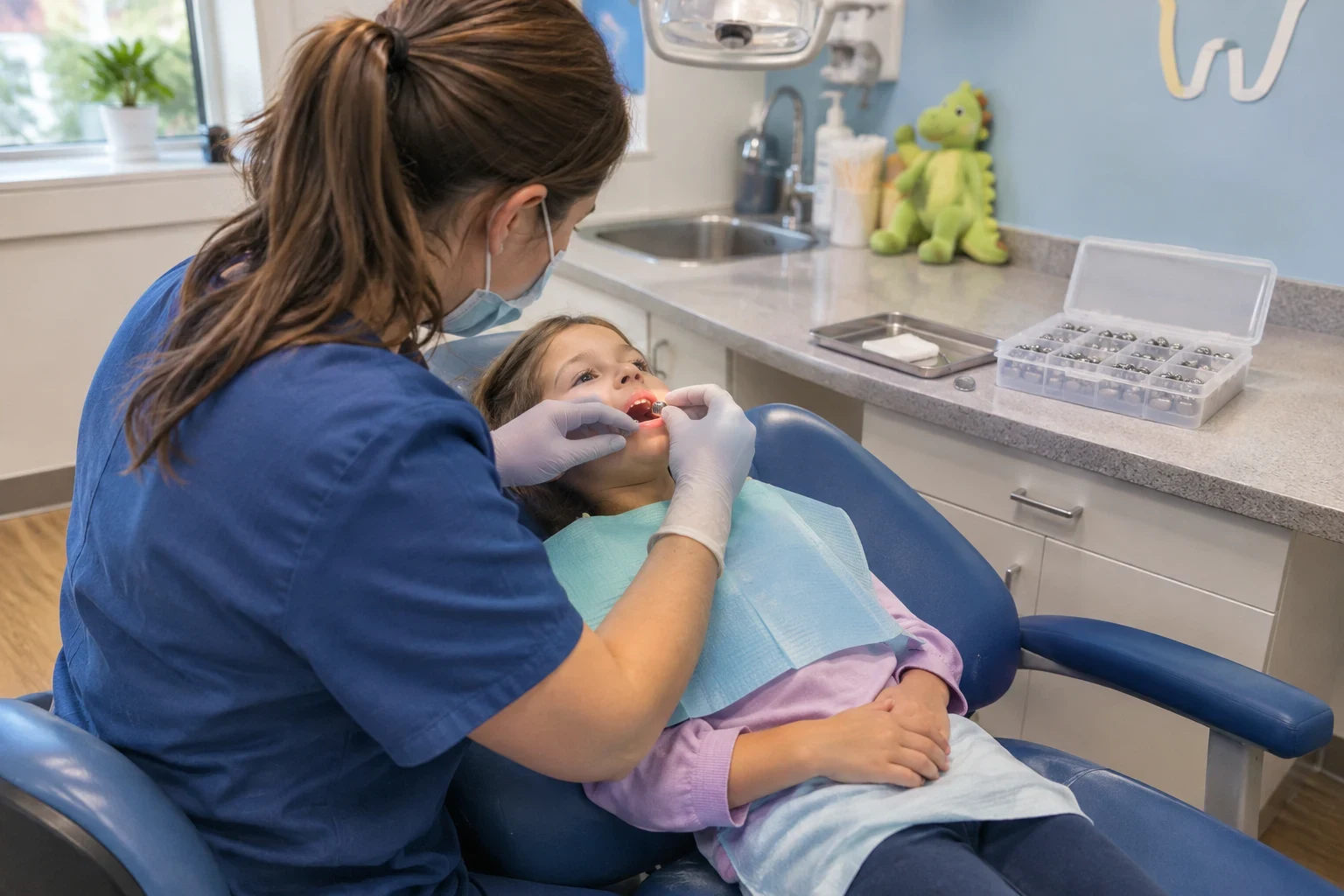
A crown is a small cap that fits over the whole tooth. For kids, it is usually used on a baby molar that has a large cavity, a crack or a weak spot left after root canal treatment. The crown holds the tooth together so your child can chew comfortably and the tooth can keep its place until the adult tooth is ready.
Baby teeth matter more than many parents expect. Some back molars stay in the mouth until age 10 to 12, and losing one early can let neighboring teeth drift into the gap. A crown is often the more durable choice when a large filling would likely crack or leak.
How long a crown lasts comes down to small things: how snugly the edge hugs the tooth, how dry the tooth is kept while the cement sets, and whether the bite feels even when your child closes. Those are the steps we slow down for.
What Your Child's Crown Visit Includes
- A close look and x-rays
- We check how deep the decay goes and whether the nerve is involved. If it is, we explain that first, because a crown placed over an infected tooth will not last.
- The right crown material
- Stainless steel crowns are strong and common on back baby molars. White zirconia or tooth-colored crowns are an option for front teeth and some back teeth. We walk you through the trade-offs for your child's tooth.
- Careful sizing and edge fit
- Kids' crowns come in many sizes. We try them on and, for steel crowns, gently shape the edge so it fits snugly at the gumline. A tight edge keeps food and bacteria from sneaking underneath.
- A dry, clean seal
- We keep the tooth isolated from saliva while the cement goes on. A clean, dry surface helps the crown bond well and stay on.
- Bite check before you leave
- Your child bites down and we adjust anything that feels high. An even bite protects the crown and the teeth on the other side.
Signs Your Child May Need a Crown
A large or deep cavity
When decay reaches several surfaces of a molar, a filling may not have enough healthy tooth to hold on to.
A filling that keeps failing
If the same tooth has needed repeat fillings, a crown can protect it more reliably.
After nerve treatment
A baby tooth that has had a pulpotomy or other root canal care is often fragile. A crown usually follows to keep it from breaking.
A chipped or cracked tooth
Falls and bumps can fracture a tooth. A crown covers the damage and helps your child chew without discomfort.
Weak enamel
Some kids have enamel that wears or crumbles easily. Covering those teeth can make eating more comfortable and slow further damage.
How Crown Day Works
- 1
Getting comfortable
We explain each step in kid-friendly words and numb the tooth gently. For anxious kids or longer visits, we can talk with you about sedation dentistry.
- 2
Cleaning out the decay
We remove the soft, decayed part of the tooth. If the nerve is affected, we treat it during the same visit before the crown goes on.
- 3
Shaping and fitting
We trim the tooth slightly so the crown can slide over it, then try sizes until one fits snugly. Steel crown edges are shaped to hug the tooth at the gumline.
- 4
Seating and checking
The crown is cemented on a dry tooth, extra cement is cleaned away from the gums, and we check the bite. Most children go home with a crown that is finished the same day.
- 5
Aftercare at home
We give you simple tips on soft foods while the numbness wears off and how to brush around the crown. We check it again at your child's regular exams and cleanings.
What Affects the Cost of a Crown
The cost depends on your child's tooth and what it needs, so we explain it before any work begins. We accept MasterCard, Visa, Discover, most insurance plans and CareCredit Patient Payment Plan. Our team can help you understand what your plan covers.
- Crown material
- Stainless steel and white crowns are priced differently, and insurance plans often cover them differently too.
- Nerve treatment first
- If the tooth needs a pulpotomy or other root canal care before the crown, that is a separate step.
- Number of teeth
- Treating more than one tooth in a visit changes the total but can mean fewer appointments for your child.
- Sedation
- If your child needs sedation to stay comfortable, that adds to the visit cost.
Questions Parents Ask About Crowns
Something not covered here? (781) 590-3367
Why put a crown on a baby tooth that will fall out anyway?
Some baby molars stay until age 10 to 12. Losing one early can cause crowding and make it harder for the adult tooth to come in. A crown keeps the tooth working and holding space until it falls out naturally.
Will the silver crown look strange?
Steel crowns are usually placed on back teeth, where they are hard to see when your child talks or smiles. If appearance matters to you, ask about white crowns. We will tell you honestly whether one is a good fit for that tooth.
Does getting a crown hurt?
The tooth is numbed before we start, so most kids feel pressure rather than pain. Gums may feel a little tender for a day or two. Children's pain relievers recommended by your pediatrician usually help.
What should my child eat afterward?
Wait until the numbness wears off so your child does not bite a cheek or lip. After that, normal foods are fine. Very sticky candy such as taffy can pull on a crown, so it is best kept to a minimum.
What if the crown comes loose?
Keep the crown if you find it and give us a call to schedule a visit. A loose crown is uncommon when the fit and seal are done carefully, but we will check the tooth and re-seat or replace the crown as needed.
Let's Protect Your Child's Smile
If a dentist has mentioned a crown, or you have noticed a tooth that looks damaged, we can take a look and explain the options. New families from Stoughton and nearby towns are welcome.